Breath, Posture and Vocal Support
What this lesson changes, and why it works.
1.Lesson introduction
Rushed, fading speech is usually a breathing problem before it is a mouth problem. When you speak on a shallow breath, you run out of air halfway through the sentence, the volume drops, and the last few words disappear. This lesson builds a comfortable, repeatable setup: an easy upright posture, a low relaxed breath, and speech that rides out on a controlled exhale.
2.Learning objectives
- Find a comfortable, open position you can hold without tension
- Breathe low and comfortably instead of high and shallow
- Speak on a controlled exhale so sentences do not fade
- Release tension in the shoulders, jaw and neck before speaking
3.Your clear-speech toolkit
Each lesson adds a layer. By the final lesson the whole stack is working at once.
- Your Lesson 1 recording— covered in an earlier lesson
- Today: Breath and physical ease— this lesson
4.Narrated audio lesson
Welcome
Lesson 2: Breath, Posture and Vocal Support
Welcome to lesson 2, Breath, Posture and Vocal Support. Rushed, fading speech is usually a breathing problem before it is a mouth problem. When you speak on a shallow breath, you run out of air halfway through the sentence, the volume drops, and the last few words disappear. This lesson builds a comfortable, repeatable setup: an easy upright posture, a low relaxed breath, and speech that rides out on a controlled exhale.
5.How it works
Spine: Tall spine, ribs stacked over hips. Slouching collapses the ribcage and shortens every phrase.
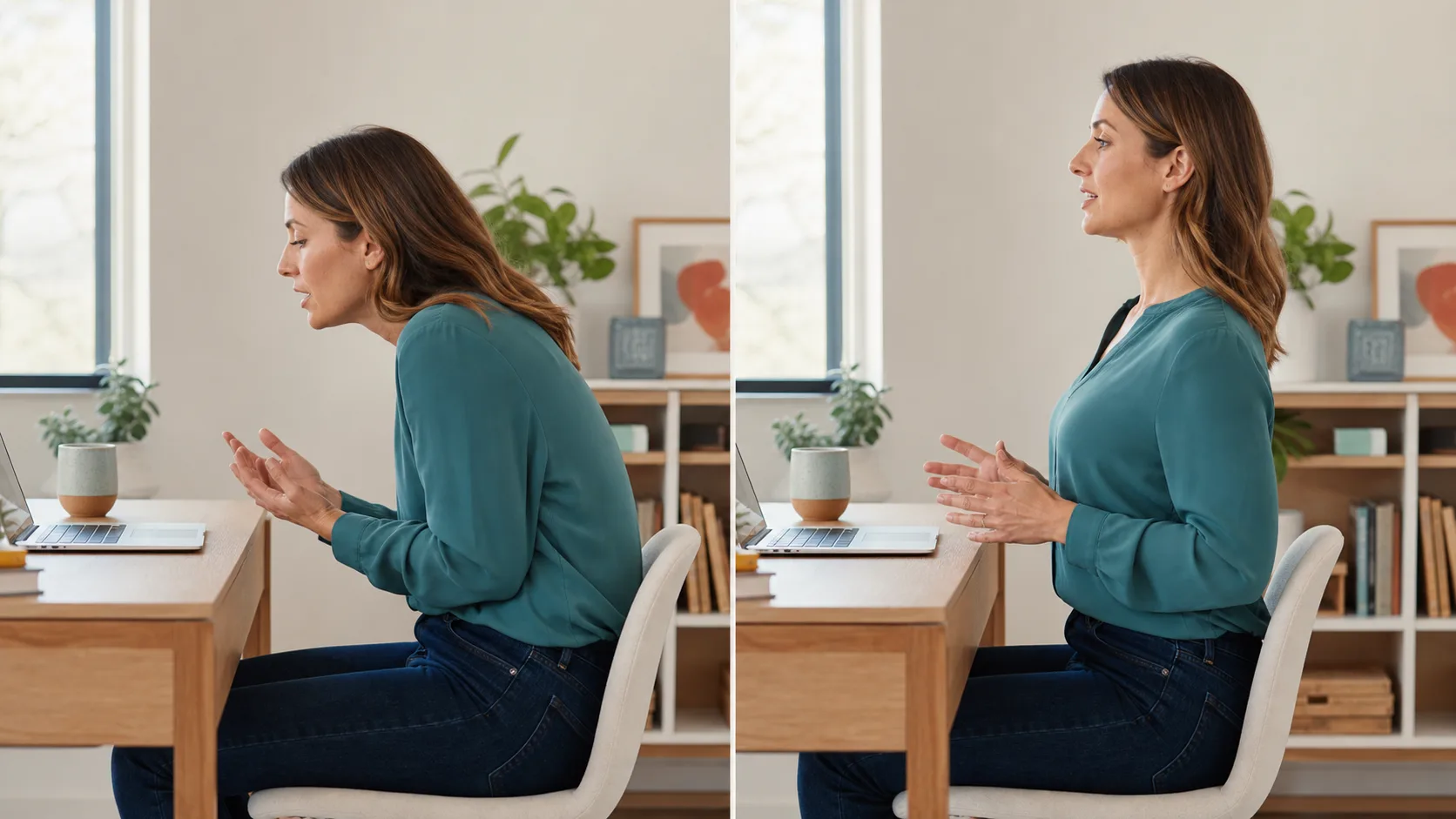
The same thing on a real body — copy the shape, not the setting.
- 1Roll the shoulders back and let them drop. Twice.
- 2Let the jaw hang loose for five seconds — teeth apart, lips together.
- 3Turn the head slowly left, then right. No stretching into pain.
- 4Breathe in for four, out for six. Three easy rounds.
Slouched vs. upright
Collapsed: chest dropped, ribs compressed, air runs out early. Open: length through the spine, shoulders low, ribs free, breath low and easy. Seated or standing — what matters is length and ease, not one fixed position.